We're proud to announce that CHASE has won the Excellence in Healthcare Partnerships award for 'Partnership Working to Address National Healthcare Priorities' for our work on a childhood immunisation project.
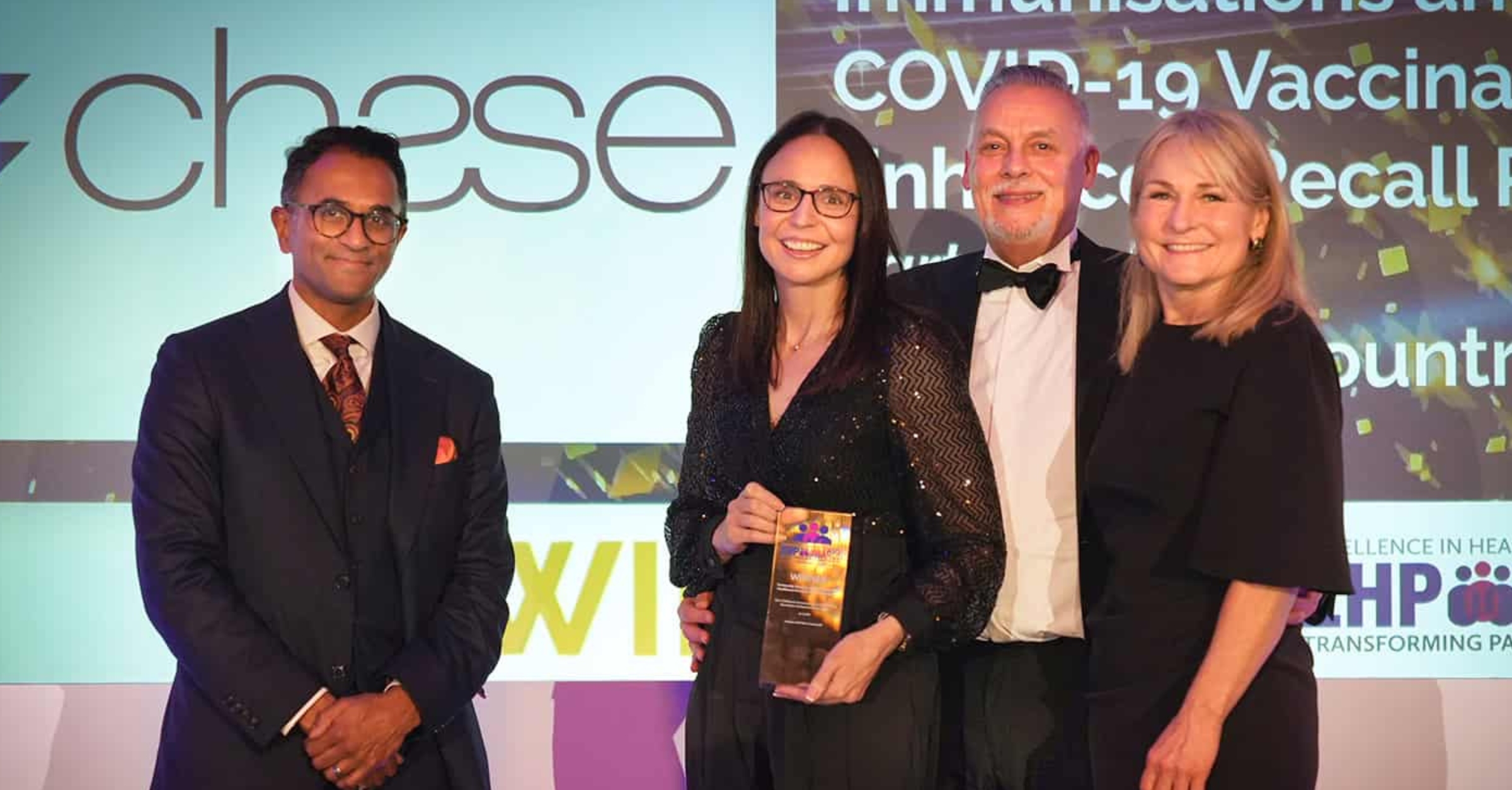
We are proud to announce that CHASE has been awarded the Excellence in Healthcare Partnerships award for Partnership Working to Address National Healthcare Priorities (National Projects). This recognition highlights our commitment to delivering scalable, person-centred solutions in collaboration with NHS system partners. Specifically, the award recognises our work on a large-scale childhood immunisation project in partnership with the Black Country NHS Integrated Care Board (ICB). This initiative addressed vaccine hesitancy through an enhanced programme that bypassed traditional "passive" recall systems. By deploying a team of facilitators to conduct intensive, 30-minute consultations, the project bridged the gap between patient identification and clinical consent, ensuring families were reached in their preferred communication style.
The timing of this award underscores the clinical urgency of our work. Last Friday’s announcement coincides with a less celebratory milestone: the World Health Organisation has officially reported that the UK has lost its measles elimination status. With nearly 3,000 cases and five deaths recorded in 2024, the resurgence of this preventable disease is a direct consequence of declining vaccination rates.
Currently, only 84.3% of five-year-olds in the UK have received both doses of the MMR (measles, mumps, and rubella) vaccine. This is significantly below the 95% threshold required for herd immunity. As measles is more contagious than both Covid and Ebola, these gaps in coverage create a high risk for community outbreaks. Our award-winning methodology demonstrates that these trends can be reversed through dedicated, evidence-based intervention.
The loss of elimination status arrives as the NHS enters a transformative period. The 10-year plan emphasises three fundamental shifts: moving from hospital to community, from analogue to digital, and from sickness to prevention. Vaccination is one of the cornerstones of this preventative strategy.
The Medium-Term Planning Framework (MTPF) reflects this, prioritising childhood immunisations within Integrated Care Board (ICB) funding and operational mandates. To support these goals, the clinical schedule is also evolving with the introduction of the combined MMRV vaccine, which includes protection against varicella (chickenpox), alongside bringing the second dose forward to 18 months, to improve early protection.
"The loss of our elimination status is deeply concerning from a public health perspective. Measles is significantly more contagious than many other viral threats, and the decline in uptake creates a real danger of imminent, large-scale outbreaks across the UK. Achieving uptake rates of over 90% is not only important to individuals but it will also restore herd immunity is not merely a statistical target; it is a clinical necessity to protect the most vulnerable members of our society." Priyanka Hinton, Customer Solutions Director, CHASE
Call/recall patient programmes conducted by CHASE have provided clear insights into why parents may delay or decline immunisation. While the national conversation focuses on conspiracy theories, direct engagement with families suggests barriers are more nuanced:
Traditional "passive" recall systems, such as automated texts or letters, are often insufficient for parents of children who remain unvaccinated. Active engagement on a human level is needed to bridge the trust gap.
By deploying dedicated facilitators to conduct in-depth, 30-minute consultations, it is possible to address specific clinical concerns that an automated message cannot resolve. Key to this success is removing language barriers. Conducting outreach in a family's first language helps facilitators build the trust needed to navigate sensitive health conversations.
This approach has delivered measurable results, including a 24% reduction in the backlog of unvaccinated children under the age of six in targeted areas. By providing parents with the time and space to ask questions, healthcare providers can move a closed door to slightly ajar, leading to informed consent and increased uptake.
The path to regaining measles elimination status is paved with in-person contact and meaningful engagement. As the NHS continues its transition toward community-based, preventative care, the integration of expert outreach teams can provide the additional capacity primary care needs to manage vaccine hesitancy.
Restoring herd immunity is a collective responsibility. By aligning delivery models with NICE quality standards and leveraging specialised communication expertise, we can continue to live in a world where vaccines remain one of the greatest success stories of modern medicine.
To speak to our team about how we can help with your patient call/recall projects and improving vaccination rates, get in touch today.
Explore our latest thinking, event updates and industry insights to stay informed.

Discover how NHS-Industry partnerships will drive innovation in 2025 by tackling patient capacity, improving efficiency and boosting patient outcomes.

.avif)
With the government halfway to its manifesto goal of 26,000 more primary care staff by March 2024, Cat Metcalfe of CHASE explores engaging clinical pharmacists.



.svg)